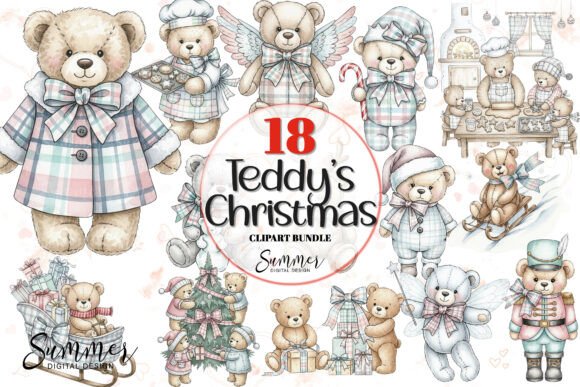
Adorable Teddy Bear Christmas Clipart: Illustrations
As a brand designer who has spent years refining visual identities for local businesses, I approach every new graphic design asset with a critical eye. It is not enough for an image to be cute; it must serve a strategic purpose within a broader brand identity. Recently, I evaluated the Adorable Teddy Bear Christmas Clipart collection for a potential holiday campaign involving a boutique children’s clothing line and a local artisanal cookie shop. My goal was to determine if these Illustrations could elevate small business branding beyond generic seasonal decor.
First Impressions and Brand Personality
The immediate mood created by the Adorable Teddy Bear Christmas Clipart is one of nostalgic warmth and gentle festivity. Unlike bold, modern minimalism or stark luxury aesthetics, this asset leans heavily into a friendly, handmade, and organic feel. The soft lines and approachable character design suggest a brand personality that is trustworthy, family-oriented, and community-focused. For a local business such as a bakery, florist, or handmade business, this emotional connection is invaluable. It signals to customers that the products inside are crafted with care, mirroring the tenderness of the artwork itself.
However, from a professional standpoint, it is crucial to recognize where this style fits. It is not suitable for high-end corporate consulting firms or ultra-minimalist luxury brands where negative space and severity define the aesthetic. Instead, it thrives in environments that value comfort, tradition, and joy. When reviewing these design assets, I look for versatility. Can this bear wear a scarf? Can it hold a sign? The adaptability of the Adorable Teddy Bear Christmas Clipart allows it to function as more than just decoration; it becomes a mascot-like figure that can guide the viewer’s eye through marketing materials.
Strategic Applications in Local Business Design
In practical terms, the utility of this clipart extends far beyond simple social media posts. For product sellers and boutique owners, integrating these Illustrations into packaging design can significantly enhance shelf appeal. Imagine a kraft paper box for homemade chocolates sealed with a sticker featuring the teddy bear holding a candy cane. This creates a cohesive unboxing experience that feels premium yet personal. Similarly, for a coffee shop launching a seasonal blend, the bear can appear on cup sleeves, menu graphics, and window decals, creating a unified visual theme that draws foot traffic.
- Product Labels: Use the bear as a central icon on jam jars, soap labels, or candle tins to differentiate from competitors.
- Hang Tags and Thank-You Cards: Incorporate the clipart into printed inserts to reinforce brand gratitude and encourage repeat purchases.
- Social Media Graphics: Create engaging Instagram stories or Facebook ads where the bear interacts with promotional text, improving click-through rates.
- Website Banners: Feature the illustration in hero sections during the holiday season to instantly communicate festive offers.
For marketers and social media managers, the key is consistency. Using the Adorable Teddy Bear Christmas Clipart across all touchpoints—from email headers to printable design flyers—builds stronger product recognition. It helps establish a clear visual hierarchy, ensuring that the festive element supports rather than overwhelms the core message. When used correctly, it improves customer trust by presenting a polished, professional image that feels intentionally designed rather than hastily assembled.
Enhancing Business Presentation and Trust
A common mistake among creative entrepreneurs is treating clipart as an afterthought. However, when integrated thoughtfully, assets like the Adorable Teddy Bear Christmas Clipart contribute to professional branding. They provide a decorative anchor that makes dense information, such as ingredient lists or price tables, more digestible. For a food business, placing the bear next to nutritional information softens the regulatory feel, making the label more inviting. This subtle psychological cue can lead to better engagement and higher conversion rates.
Furthermore, these Illustrations support better shelf appeal in physical retail environments. In a crowded marketplace, a package featuring a charming, high-quality character stands out against sterile, text-heavy competitors. It creates an emotional hook, especially for parents shopping for children’s products or gift buyers looking for something heartfelt. The asset acts as a bridge between the product and the consumer, fostering a sense of familiarity and warmth that purely typographic designs often lack.
Where to Use Caution
While versatile, the Adorable Teddy Bear Christmas Clipart is not a universal solution. It should be used carefully in contexts requiring strict formality or legal clarity. Avoid placing it over complex backgrounds where contrast is low, as this compromises readability and accessibility. It is also ill-suited for luxury minimalist brands where the absence of decoration is the primary design statement. Additionally, do not crowd the illustration onto small labels already filled with mandatory legal text or barcodes. In editorial design or dense informational layouts, ensure the bear does not compete with critical data. The goal is enhancement, not distraction.
Practical Brand Designer Notes
Before committing to any commercial design project, I recommend a rigorous testing phase. First, test the Adorable Teddy Bear Christmas Clipart on real product mockup templates. See how it looks on a curved bottle versus a flat box. Check its performance in black and white to ensure it remains recognizable without color, which is essential for cost-effective single-color printing. Preview it on small labels to verify that intricate details do not blur when scaled down.
Typography pairing is another critical consideration. Test the illustration beside various font styles. It often pairs beautifully with handwritten fonts for a rustic feel, or clean sans serif fonts for a modern touch. Avoid overly ornate script fonts that may clash with the bear’s simplicity. If you are using a Canva template or working in vector software, inspect the SVG or PNG quality. Ensure the transparency is clean and there are no jagged edges. Finally, always confirm the commercial license terms. Whether you are sourcing from a creative marketplace or a independent artist, understanding usage rights is vital for client work and physical product sales. By treating these clipart elements with the same rigor as custom logo design, you ensure that your web design and print materials maintain a high standard of modern design integrity.