Reviewing the Christmas Fox PNG for Embroidery
As a designer who spends half my life staring at digitized files and the other half watching needles punch through fabric, I have developed a keen eye for what works in the hoop and what merely looks good on a screen. When I first opened the Christmas Fox PNG File, my initial reaction was one of cautious optimism. The illustration style is charming, capturing that whimsical holiday spirit that sells well during the fourth quarter. However, converting a raster image like a PNG into a viable machine embroidery design requires more than just hope; it requires strategic planning and an understanding of how thread behaves differently than ink.
First Impressions and Visual Personality
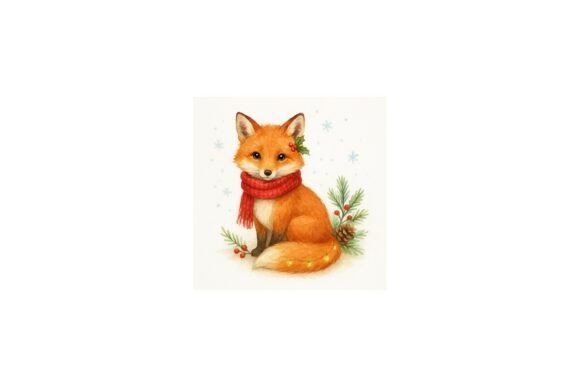
The mood of this design is undeniably cozy. It features a fox, likely adorned with winter accessories or surrounded by festive elements, rendered in a style that suggests warmth and playfulness. For embroidery designers and Etsy sellers, this visual personality is a strong asset. It fits naturally into the niche of holiday embroidery, appealing to customers looking for personalized gifts that feel handmade rather than mass-produced. The layout appears balanced, which is crucial when you are working within the constraints of a specific hoop size. If the details are too dense, the thread will bunch; if they are too sparse, the fabric will show through uncomfortably.
From a practical standpoint, the level of detail in the Illustrations category often dictates the complexity of the digitizing process. A PNG file does not contain stitch data, so you must either digitize it yourself or use it as a reference for creating applique designs. This distinction is vital. If you intend to use this image as a direct print-transfer for embroidery, you need to ensure the lines are thick enough to survive the stitching process without losing their shape.
Real-World Application: The Holiday Tote Bag Test
To truly evaluate the potential of the Christmas Fox PNG File, I imagined a common real-life scenario: preparing a custom embroidered tote bag for a local craft fair. Tote bags are a staple for small shop products because they offer a large, flat canvas. In this context, the fox design would serve as the focal point. I considered how the thread colors would interact with a natural cotton canvas. A rich rust orange for the fox, contrasted with deep forest green for any foliage, would create a striking visual appeal.
However, the texture of the fabric matters. Canvas has a weave that can interfere with fine details. If the PNG features intricate fur textures or tiny facial features, these might get lost in the fabric grain. For a handmade product like this, clarity is key. Customers need to recognize the subject from a few feet away. If the design relies on subtle gradients, which are difficult to achieve with standard fill stitch techniques, you might need to simplify the design or opt for an applique design approach where fabric pieces are stitched down to create the shapes, reducing stitch density and improving durability.
Apparel and Wearable Projects
Moving beyond accessories, let’s consider custom apparel. A sweatshirt embroidery project using this fox motif could be a bestseller for boutique branding. The softness of fleece or French terry cloth provides a forgiving background for embroidery. Here, the stitch density becomes a critical factor. Too many stitches on a stretchy fabric like a sweatshirt can cause puckering, ruining the look of the finished product. I would recommend using a cut-away stabilizer to support the fabric and prevent distortion. For a baby embroidery project, such as a onesie, the design would need to be scaled down significantly. In this case, you must check whether the small details remain clear or if they merge into a blob of thread. Simplifying the design for smaller hoop sizes is often necessary to maintain professionalism.
Navigating Technical Challenges
While the aesthetic of the Christmas Fox PNG File is appealing, there are areas where caution is required. Using this design on dark fabric presents a challenge. If the original illustration uses light colors for highlights, you must ensure your thread selection provides enough contrast. A common mistake among hobbyists is choosing thread colors that look good on the spool but disappear against the garment. Testing the design in black and white mockups can help you value-check the contrast before you even thread the needle.
Curved surfaces, such as caps or hats, require special attention. Embroidering on a curved surface can distort the image if the design is not properly centered and stabilized. The fox’s face, being the focal point, must remain symmetrical. If the PNG file has asymmetrical elements, you need to decide which side faces forward and adjust the digitizing accordingly. Additionally, detailed corners and sharp angles in the illustration may require careful use of satin stitch borders to keep them crisp. Without proper underlay stitches, these corners can pull and lose their definition after washing.
Enhancing Brand Consistency and Value
For creative entrepreneurs and digital product sellers, the way you present this design affects customer trust. A well-executed embroidery project signals quality. If the Christmas Fox PNG File is used to create a series of matching items—such as a pillow cover, kitchen towel, and apron—it creates a cohesive brand identity. This consistency helps in building recognition and buyer engagement. When customers see that your small shop product line has a unified visual theme, they are more likely to purchase multiple items.
Moreover, the giftability of the item increases with the perceived effort and skill involved. A cleanly stitched fox on a high-quality linen tea towel feels luxurious. It transforms a simple household item into a personalized gift that recipients will cherish. This emotional connection is what drives repeat business for craft business owners. However, this only works if the technical execution is flawless. Loose threads, uneven tension, or visible stabilizer can detract from the value, no matter how cute the design is.
Practical Designer Notes for Success
Before committing to a full production run, always test the design on scrap fabric that matches your final material. This step allows you to check thread color contrast and adjust stitch density if necessary. If you are creating a digital embroidery file from this PNG, ensure you have the right software and skills to convert the image accurately. If you are using it as a reference for manual digitizing, pay close attention to the flow of the stitches. Direction matters; following the natural lines of the fox’s fur can add depth and realism to the embroidery project.
Finally, always confirm licensing terms. Just because you have a PNG file does not automatically grant you the right to sell finished items or digital products derived from it. Check the source of the Christmas Fox PNG File to ensure it allows for commercial use. This due diligence protects your business and ensures you can confidently market your commercial embroidery work without legal concerns. By combining artistic vision with technical precision, you can turn this charming illustration into a profitable and beautiful addition to your portfolio.